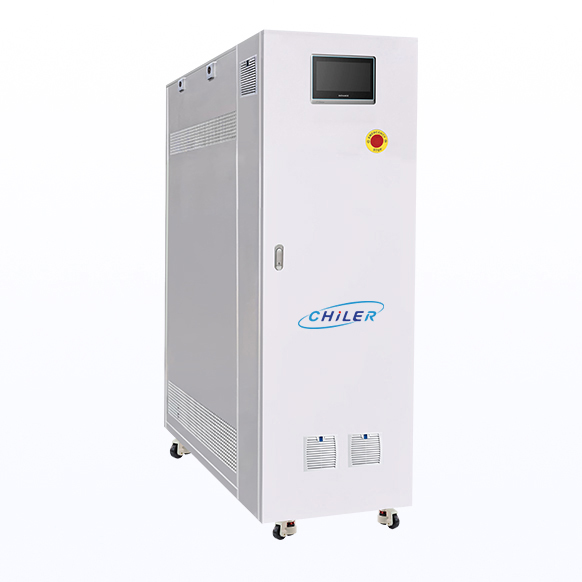
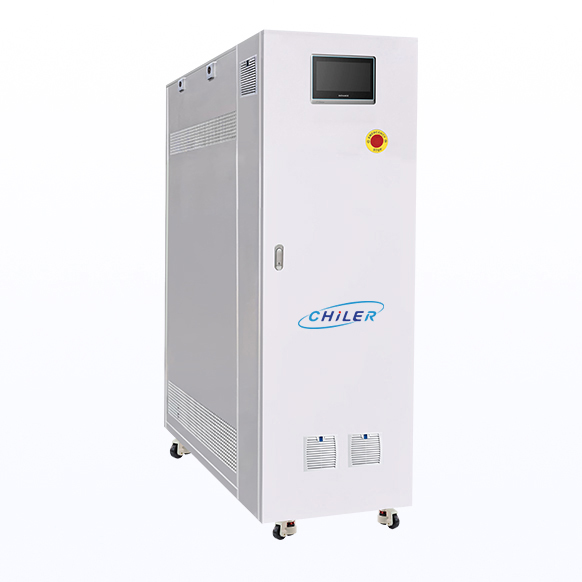
The TCU (Temperature Control Unit) integrates existing thermal energy (such as steam, cooling water, and ultra-low flow liquid, i.e. “primary system”) infrastructure into a single-fluid system or secondary loop dedicated to controling process equipment temperatures. It controls the entire reaction process temperature through computational algorithms, leveraging existing cold and heat sources (e.g. steam, boiler heat, cooling water, and low-temperature cooling source).
The HTF heat‑exchange type performs heat and cold exchange by utilizing existing cold and heat sources (steam, boiler heat source, cooling water, low‑temperature cold source and other hot‑cold media). It adopts high‑low temperature heat sources for heat transfer and temperature control, achieving a wide temperature range. Full‑range temperature control from ‑110 °C to 300 °C is available to stabilize the temperature of process equipment.
A built‑in electric heater can be equipped for auxiliary heating, enabling the TCU temperature control system to reach higher design temperatures. The maximum design temperature is 400 °C, with an operating temperature of 380 °C.